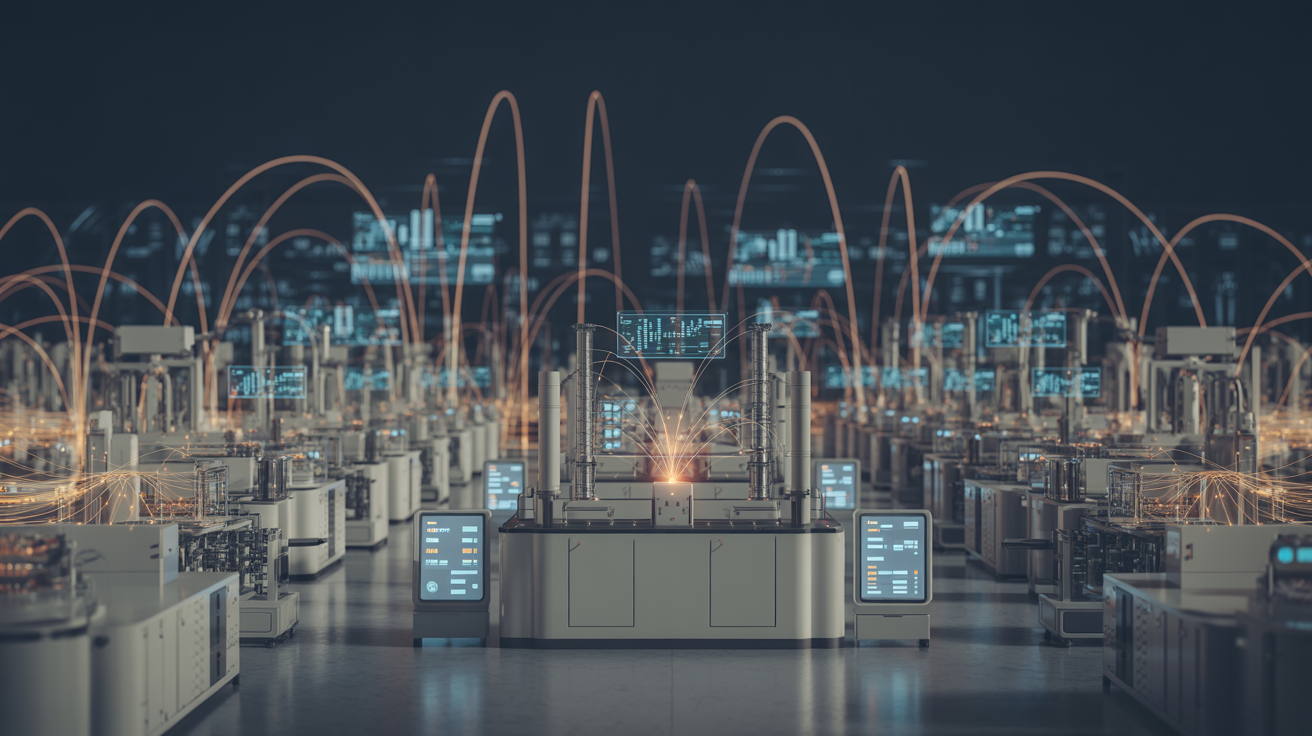
Industry 4.0 represents the fourth industrial revolution - the convergence of digital technologies with physical manufacturing processes. For manufacturers looking to stay competitive, understanding and implementing these technologies is no longer optional.
Industrial Internet of Things (IIoT): The foundation of Industry 4.0. IIoT connects machines, sensors, and systems to create a data-rich manufacturing environment. Applications include real-time equipment monitoring, environmental sensing, asset tracking, and energy management.
Artificial Intelligence and Machine Learning: AI transforms raw data into actionable intelligence through predictive maintenance algorithms, quality prediction models, demand forecasting, and autonomous optimization of production parameters.
Digital Twins: Virtual replicas that mirror physical assets in real-time. Used for process simulation, predictive analytics, design validation, and operator training without risking actual equipment.
Cloud and Edge Computing: Cloud provides scalable data storage and processing. Edge computing handles time-critical decisions at the point of data generation.
Advanced Robotics and Cobots: Modern robots work alongside human operators, handling repetitive tasks while humans focus on complex decision-making.
Phase 1: Assessment and Strategy (2-4 weeks) - Conduct a digital maturity assessment, identify high-impact opportunities, develop a technology roadmap with clear ROI projections.
Phase 2: Pilot Program (2-3 months) - Start with a focused IoT pilot on one production line. Deploy sensors, establish data collection, and demonstrate quick wins.
Phase 3: Expand and Integrate (3-6 months) - Scale successful pilots across additional lines and facilities. Integrate with existing MES/ERP systems.
Phase 4: Advanced Analytics (6-12 months) - Deploy AI/ML models for predictive maintenance, quality prediction, and process optimization. Build digital twins.
Phase 5: Full Smart Factory (12-18 months) - Achieve end-to-end digital integration with autonomous decision-making and self-optimizing production.
For ISO certification support during your Industry 4.0 journey, visit our sister brand Exceleor for Quality 4.0 digital quality management systems.
Ready to begin your Industry 4.0 journey? Contact OPZ360 for a free digital maturity assessment.
The Core Technologies of Industry 4.0
Industrial Internet of Things (IIoT): The foundation of Industry 4.0. IIoT connects machines, sensors, and systems to create a data-rich manufacturing environment. Applications include real-time equipment monitoring, environmental sensing, asset tracking, and energy management.
Artificial Intelligence and Machine Learning: AI transforms raw data into actionable intelligence through predictive maintenance algorithms, quality prediction models, demand forecasting, and autonomous optimization of production parameters.
Digital Twins: Virtual replicas that mirror physical assets in real-time. Used for process simulation, predictive analytics, design validation, and operator training without risking actual equipment.
Cloud and Edge Computing: Cloud provides scalable data storage and processing. Edge computing handles time-critical decisions at the point of data generation.
Advanced Robotics and Cobots: Modern robots work alongside human operators, handling repetitive tasks while humans focus on complex decision-making.
Implementation Roadmap: 5 Phases
Phase 1: Assessment and Strategy (2-4 weeks) - Conduct a digital maturity assessment, identify high-impact opportunities, develop a technology roadmap with clear ROI projections.
Phase 2: Pilot Program (2-3 months) - Start with a focused IoT pilot on one production line. Deploy sensors, establish data collection, and demonstrate quick wins.
Phase 3: Expand and Integrate (3-6 months) - Scale successful pilots across additional lines and facilities. Integrate with existing MES/ERP systems.
Phase 4: Advanced Analytics (6-12 months) - Deploy AI/ML models for predictive maintenance, quality prediction, and process optimization. Build digital twins.
Phase 5: Full Smart Factory (12-18 months) - Achieve end-to-end digital integration with autonomous decision-making and self-optimizing production.
For ISO certification support during your Industry 4.0 journey, visit our sister brand Exceleor for Quality 4.0 digital quality management systems.
Common Implementation Challenges
- Legacy system integration
- Data silos and inconsistent data formats
- Workforce skill gaps
- Cybersecurity concerns
- Change management resistance
Ready to begin your Industry 4.0 journey? Contact OPZ360 for a free digital maturity assessment.